
How we raise them
Seven months on pasture, at 1,050 m
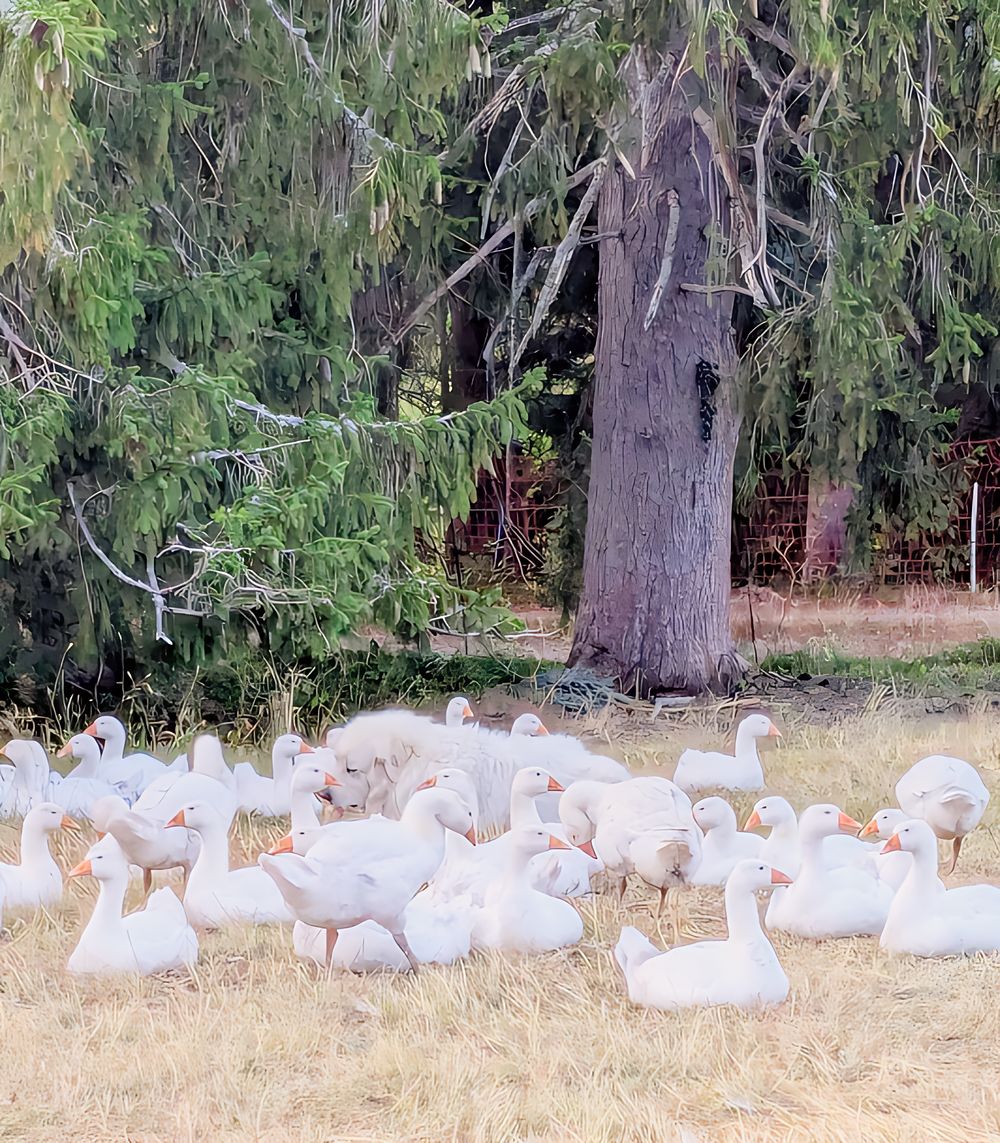
The geese arrive at Martel-Dernier in spring, just a few days old, and leave in mid-November. In between, they spend most of their lives outdoors on a large pasture edged with fir trees, with a pond and two dogs to watch over them.

From gosling to fully grown goose
Five stages, from April to mid-November
-
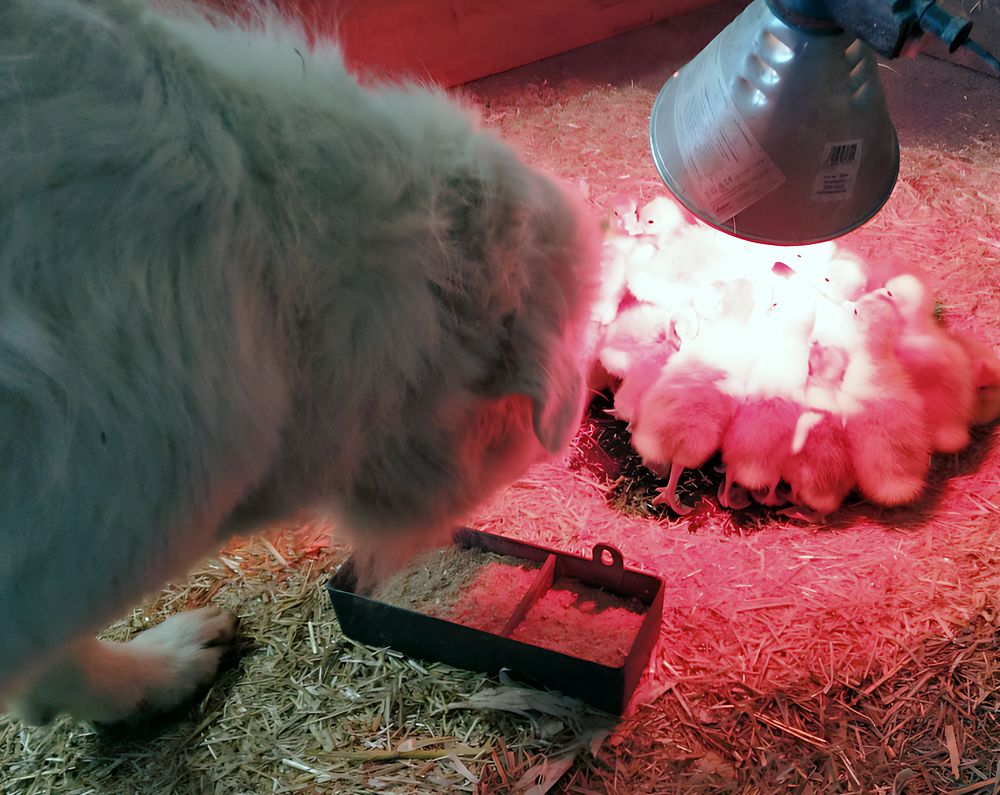 April
Arrival in the barn
The goslings, hatched in Switzerland, arrive in the barn. Under the heat lamp it is 32 °C on the first day; the temperature is then lowered gradually as their down gives way to feathers. Our two livestock guardian dogs, known locally as patous, meet them in these very first days.
-
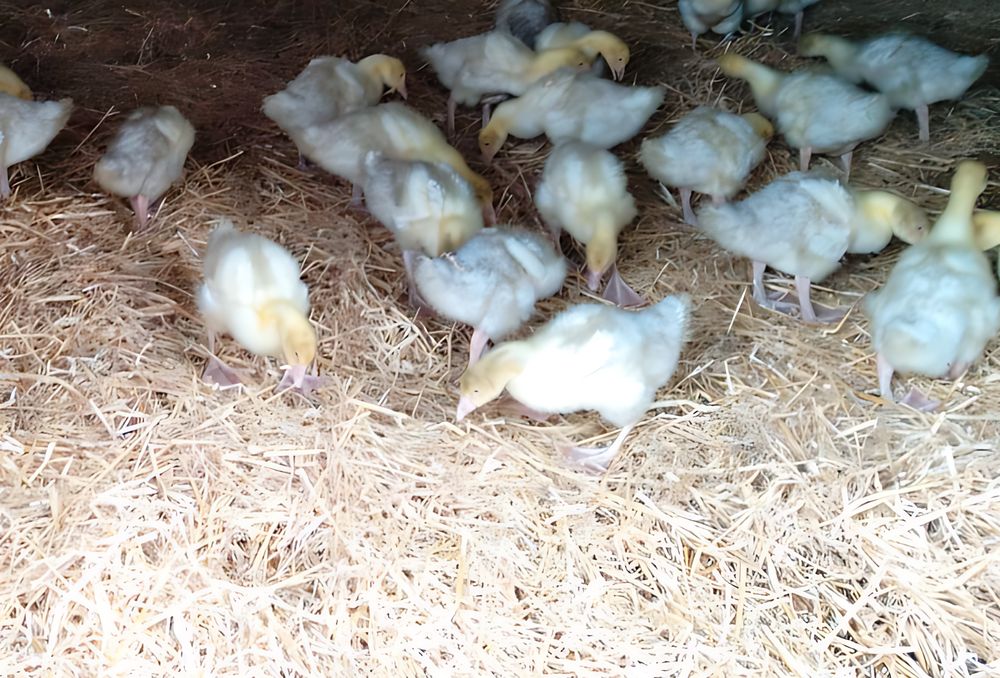 Week 6
First outings
In fine weather, the goslings go out for an hour or two under supervision. They nibble the grass and enjoy the sun, then go back to the barn.
-
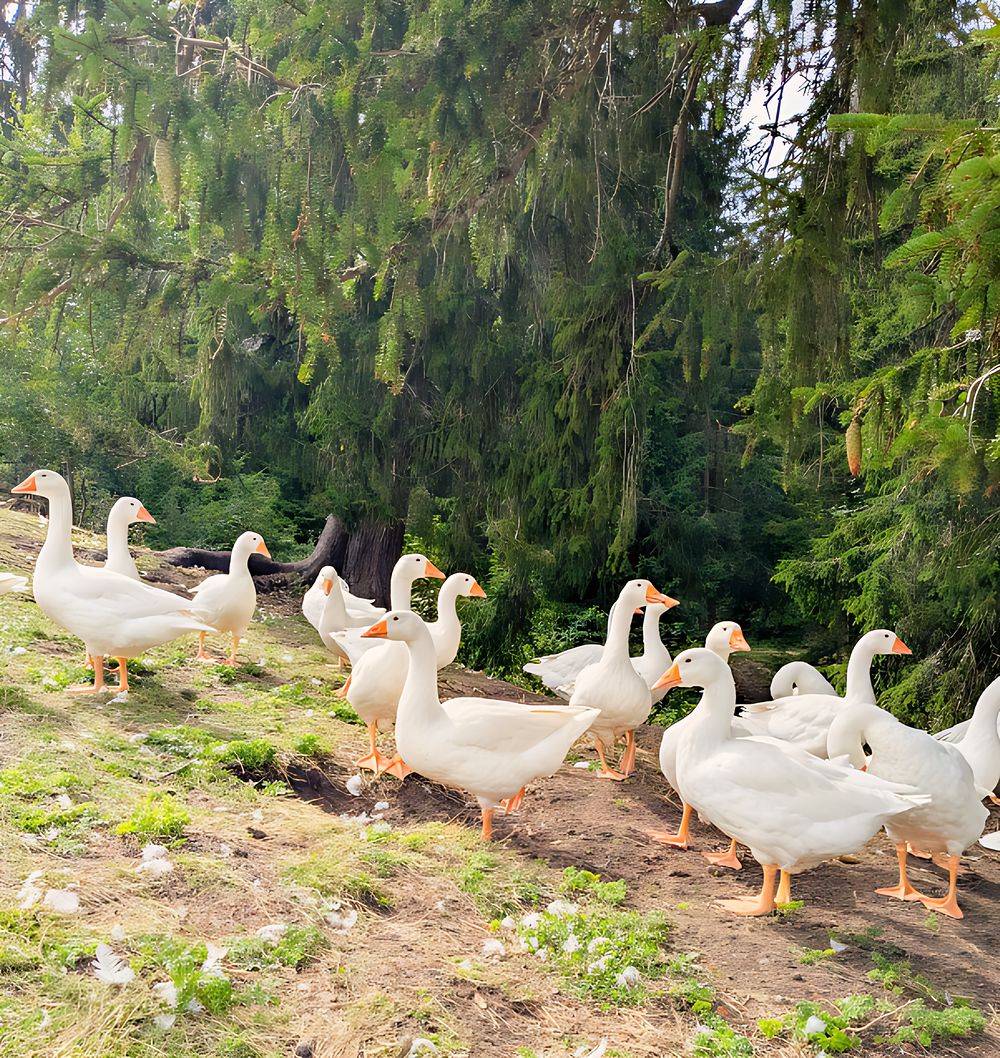 Week 8
Full plumage
Their feathers now keep the rain off. They go out to pasture every day and discover the pond, which they need to keep their plumage in good condition.
-
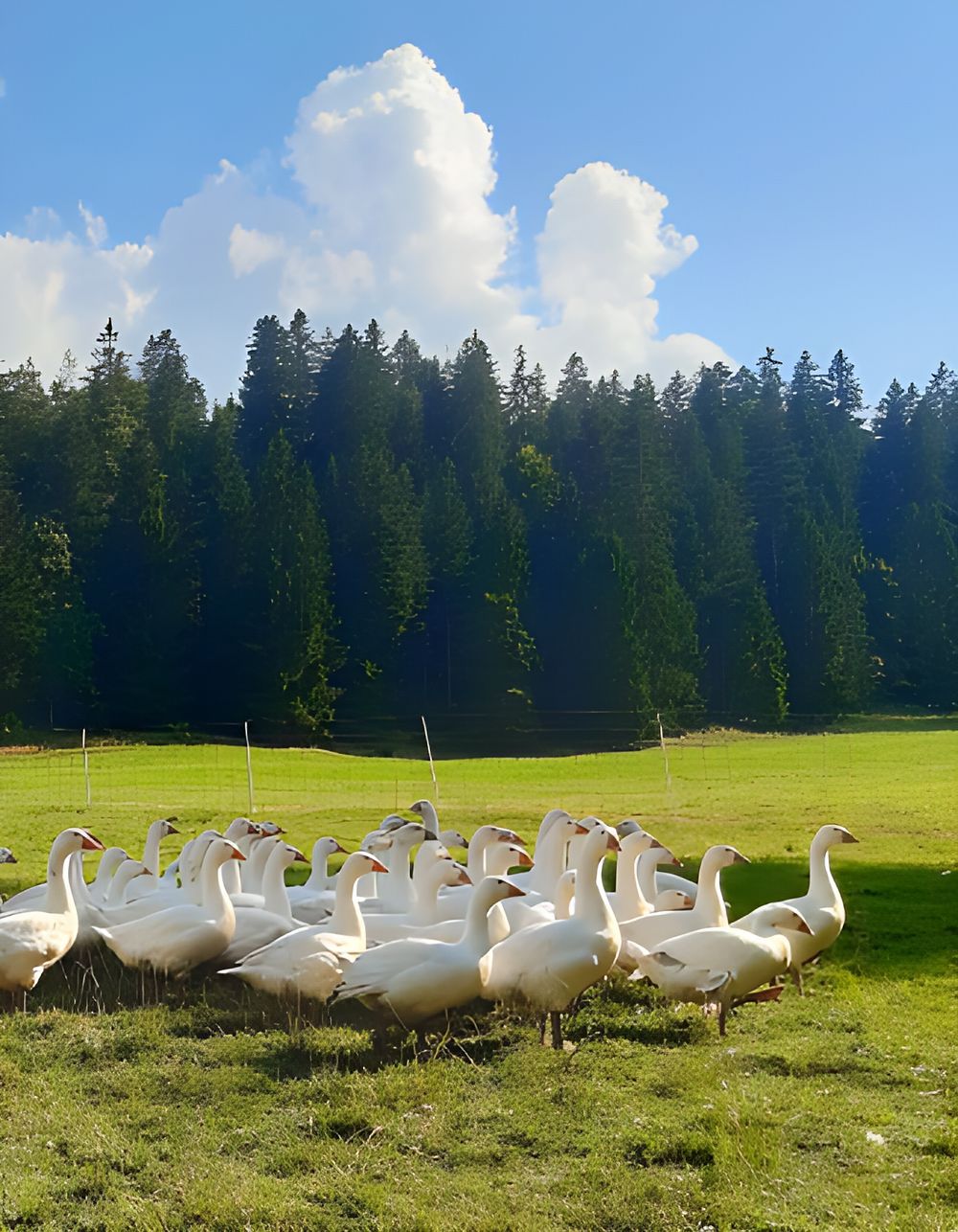 June to October
Life on pasture
The geese stay outdoors day and night, with a shelter. Grass is the mainstay of their diet. They grow slowly and keep on the move.
-
 October to mid-November
The final weeks
As the grass becomes less plentiful, we add grain to their diet. In mid-November, the geese are slaughtered at a specialist Swiss abattoir.


Protection
Two guardian dogs, a fence, a shelter
On pasture, the geese need protecting from foxes and martens, and also from wolves, which have attacked several times in the area. Two livestock guardian dogs, patous as they are known here, live with the flock day and night.
They have grown up with the geese since their first days in the barn and treat them as their own flock. Fine-mesh electric fencing surrounds the pasture, and a shelter keeps the geese out of bad weather.

Water
A pond rather than a water trough
A goose needs to dip its head and let water run down its back to keep its plumage clean and waterproof. The label therefore requires daily access to bathing water as soon as the geese go out to pasture. Ours is a pond at the edge of the fir trees.

On the plate
How pasture-raising shapes the meat
A pasture-raised goose grows over 26 to 35 weeks and walks all day. Its meat is firmer and darker, similar to game meat, and loses little volume during cooking. We do not use preventive antibiotics.
Our recipesweidegans.ch label
The rules we follow
- No force-feeding, no beak trimming.
- At least 100 m² of pasture per goose, i.e. 1 hectare for 100 geese.
- Out on pasture every day from eight weeks old.
- Water to bathe in, deep enough to dive.
- Grass is the main feed; grain is only a supplement.
- Slaughter in Switzerland, with transport in line with animal welfare law.
Every year, we sign a declaration committing us to these rules. If anything gives cause for concern, the association can inspect the farm unannounced. The association at weidegans.ch →
Reserve your goose
Fresh in mid-November, or frozen for Christmas.